

In a furniture shop or a serious home-based finishing setup, a workflow built around painting with spray gun equipment must be treated as a professional system. The goal is not simply to push paint through a nozzle. The goal is to create smooth coverage, controlled texture, reliable repeatability, and a surface that looks ready for delivery without depending on endless correction.
At AV Spray Guns, we focus on Avalon because finishing work deserves tools built for real use, not disposable shortcuts. A cheap gun can look acceptable in the package, but that does not mean it will keep a clean fan, respond well to adjustments, or remain useful after a seal, cap, or needle starts to fail. Serious work needs equipment that can stay in service.
For furniture, cabinets, custom parts, motorcycle pieces, trim, and automotive refinishing, painting with spray gun equipment only makes sense when the tool supports the result. Avalon gives painters a stronger foundation: fine atomization, controlled delivery, serviceable parts, and a range that lets the user choose between full-size coverage and compact detail control.
Professional setups start before the trigger moves
A professional finish begins before material reaches the surface. The work area must be clean, the air supply must be stable, the coating must be filtered, and the gun must be matched to the piece. When these elements are ignored, the painter ends up fighting texture, stripes, dry spray, and loaded edges while the job is already wet.
For a workshop or home business, painting with spray gun equipment should never feel like improvising with a random tool. A customer will notice uneven sheen on a cabinet front, roughness on a table, or defects on a custom part. Even when the painter works outside a large production shop, the finish still has to look professional.
Avalon tools are chosen for that kind of pressure. They are built for painters who need control across repeated projects, not for one weekend task. A professional gun makes small adjustments easier to read, gives the hand a more stable response, and helps the user build habits that can be repeated on the next order.

Avalon tools belong in serious finishing workflows
The strongest setup depends on the surface, the coating, and the level of detail. A painter working on cabinet doors needs a different rhythm than someone coating narrow furniture legs or small automotive trim. In that context, painting with spray gun equipment should mean using the right Avalon format for the job, not forcing one tool into every situation.
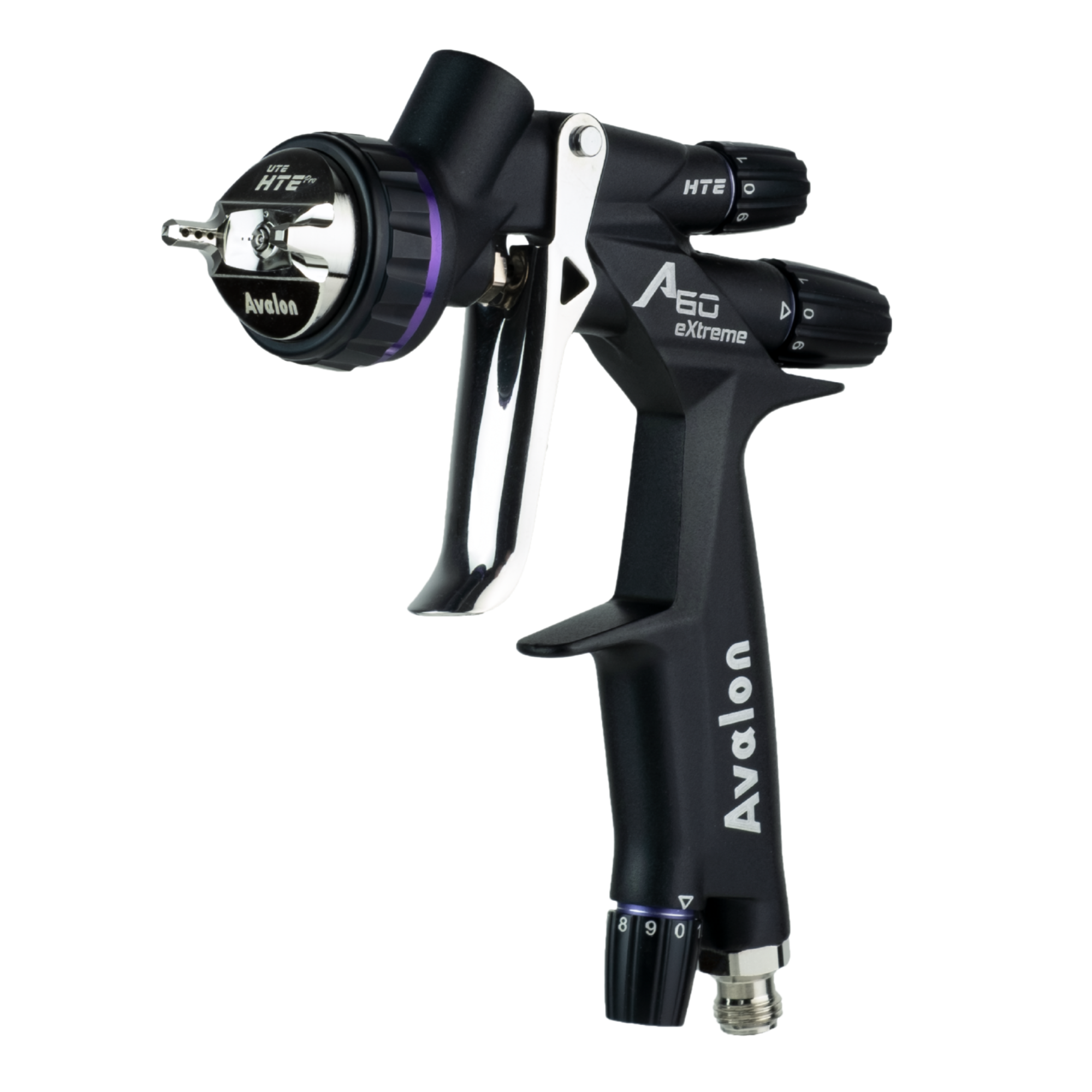
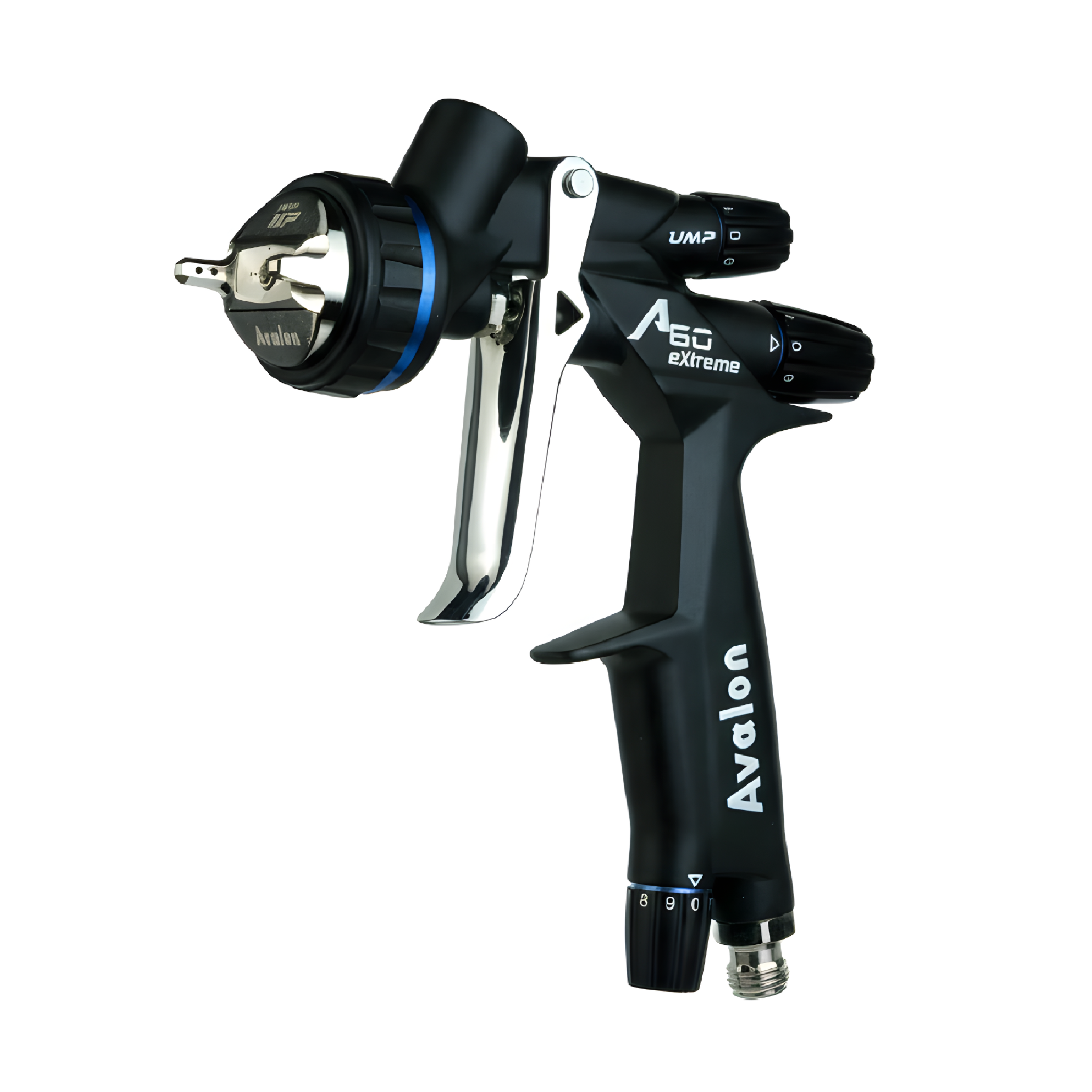
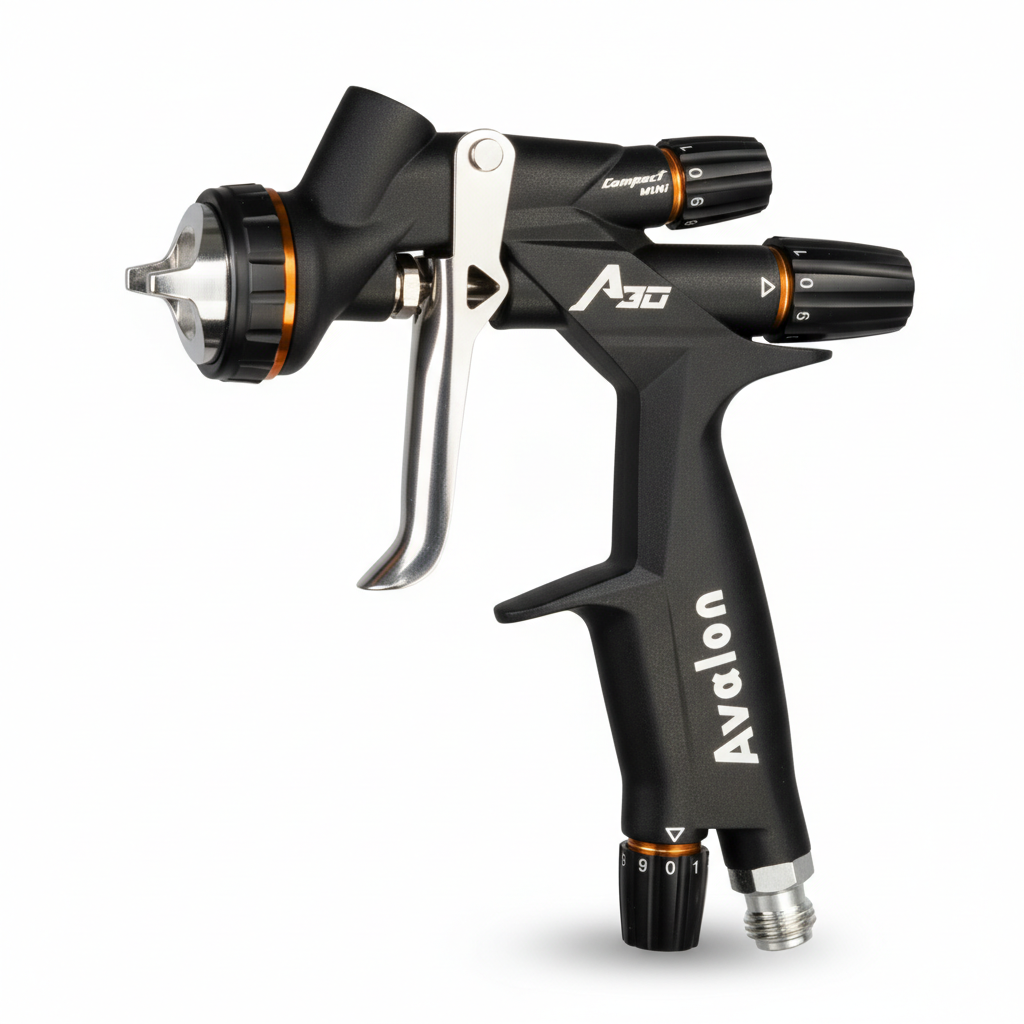
The Avalon A60 eXtreme HTE 1.3 mm is our main recommendation when fine atomization and surface quality are the priority. The Avalon A60 eXtreme HTE 1.4 mm is better when the job needs a little more delivery for clears, light primers, larger furniture faces, and broader coated areas. The A-30 Mini Touch-Up Spray Gun 1.0 FX supports detailed zones where a full-size fan would create unnecessary excess.
- The Avalon A60 eXtreme HTE 1.3 mm fits fine furniture finishes, smooth topcoats, cabinet fronts, drawers, panels, and refined clear or color work.
- The Avalon A60 eXtreme HTE 1.4 mm helps when the project needs fuller flow while still keeping control over the surface.
- The A-30 Mini Touch-Up Spray Gun 1.0 FX is the compact choice for trim, furniture legs, small panels, localized repairs, and detailed automotive parts. A complete shop can use the A60 family for main coverage and the A-30 Mini for areas that need closer control.
This is the difference between building a professional setup and buying a one-size tool that quickly reaches its limit. The painter gets better results when the gun fits the piece, the coating, and the pace of the work. That is why Avalon belongs in shops where the finish has to be delivered cleanly, not explained away.

Spray quality depends on atomization and fine control
Surface quality comes from how the coating is broken up and placed. When atomization is poor, the finish may show orange peel, roughness, dry edges, or uneven gloss. A proper fan should look balanced, with clean edges and no heavy center that overloads the surface. The painter should be able to adjust fluid, air, and fan without losing confidence in the pattern.
In painting with spray gun workflows, the tool must support control instead of forcing correction. If the gun responds too aggressively, the painter may overapply material. If the fan is weak, overlap lines can show under light. If the trigger feels inconsistent, starts and stops become harder to keep clean around cabinet edges, table corners, or body lines.
Avalon’s value is practical because it helps the painter stay focused on the surface. A clean pattern allows steadier overlap, a finer mist supports smoother leveling, and a balanced body helps reduce fatigue during longer sessions. A good gun does not replace skill, but it gives skilled hands a better tool to work with.
Cheap guns create costs beyond the checkout counter
Low-grade disposable guns often look affordable only at the moment of purchase. The real cost appears when the fan changes halfway through a project, the cap starts causing spitting, the trigger loses smoothness, or a damaged part cannot be replaced. Then the painter spends more time sanding, recoating, and trying to recover a finish that should have stayed under control.
For a business built around painting with spray gun equipment, downtime is not a small issue. A failed tool can delay a cabinet set, a table, a custom panel, or a refinishing job that already had labor invested in preparation. When the gun cannot be serviced, the shop is forced to buy again and hope the next unit behaves the same way.
A professional tool changes that equation. When replacement parts, cleaning discipline, and a stable product platform are part of the purchase, the gun becomes part of the shop’s working system. Avalon tools are not meant to be thrown away after a few problems. They are meant to be maintained, cleaned, supported, and used across serious finishing work.
Furniture and automotive parts need stable spray passes
Furniture and automotive parts share one important demand: the surface exposes mistakes quickly. A cabinet front shows uneven sheen across a flat plane. A table top reveals texture under light. A motorcycle fairing or mirror cap shows heavy edges around curves. These surfaces may be different, but all of them reward a controlled spray pattern.
That is why painting with spray gun tools in a serious shop must focus on stable passes. The gun should stay parallel to the surface, the overlap should remain consistent, and the trigger should open and close with intention. When the painter changes angle or speed too much, film build becomes uneven and the finish loses its professional look.
Avalon makes sense for shops that move between furniture and refinishing work because the lineup covers more than one surface type. A60 guns support broader coverage on doors, panels, cabinets, and larger parts. The A-30 Mini adds control around details, edges, trim, and compact pieces. That split gives the painter a cleaner way to match the tool to the job.
Preparation protects finish quality before coating
Preparation is not separate from spraying. Dust left on the surface, unfiltered paint, weak masking, poor lighting, or contaminated air can ruin the result before the gun is blamed. A professional finish needs clean material, a clean cup, correct reduction, stable air pressure, and a surface that is ready to accept coating without hidden problems.
In painting with spray gun setups, product preparation deserves the same attention as the gun itself. Paint, lacquer, primer, sealer, and clear all behave differently. The user should strain the material, confirm viscosity based on the product’s technical guidance, and test the pattern on scrap before touching a customer piece or a part prepared for sale.
The basics still matter even with premium equipment. A useful reference on spray finishing fundamentals explains atomization, overspray control, and the value of applying finish in a controlled way. That aligns with the way we approach Avalon tools: start with the right setup, then protect the result through clean preparation and repeatable technique.
Practical setup guide for varied pro shop projects
The following guide helps match common shop work with the Avalon tool that makes the most sense. It is not a replacement for testing the actual product, but it gives painters a practical starting point. For anyone building a painting with spray gun workflow, the goal is to choose the gun that makes the pass easier to repeat.
| Shop project | Avalon setup | Main benefit | Best use |
|---|---|---|---|
| Cabinet doors and drawer fronts | A60 eXtreme HTE 1.3 mm | Fine atomization and smooth control | Color and clear topcoats |
| Tables, panels, and wider faces | A60 eXtreme HTE 1.4 mm | Fuller delivery with stable coverage | Clears and light primer work |
| Furniture legs and narrow rails | A-30 Mini 1.0 FX | Compact control around tight shapes | Detail zones and small parts |
| Motorcycle parts and trim | A60 or A-30 Mini by size | Better match between fan and surface | Curves, edges, and custom pieces |
| Localized repair work | A-30 Mini 1.0 FX | Less excess around the repair area | Touch-ups and focused correction |
A shop does not need to treat every surface the same way. Broad furniture faces need rhythm and stable coverage. Detailed parts need visibility and closer control. With Avalon, the painter can build a setup that respects those differences instead of relying on a weak tool that feels equally limited on every job.

5 habits that improve professional spray results fast
Better finishes come from habits that can be repeated under pressure. The tool matters, but the way it is used matters just as much. When painting with spray gun equipment becomes part of a business, the painter needs a routine that protects the result before, during, and after application.
- Check air pressure with the trigger open so the setting reflects real spraying conditions.
- Test the fan on scrap before the first pass reaches the prepared surface.
- Keep the gun parallel and avoid wrist flicks at the end of each pass.
- Open fluid after movement begins and close it before the pass ends.
- Clean the cap and tip whenever buildup starts changing the spray pattern.
These habits reduce unnecessary correction. A painter who controls pressure, fan shape, distance, and trigger timing can read the surface more clearly. The booth-level setup habits we use for refinishing also apply to furniture and custom parts because clean results depend on the same foundations: air, fluid, overlap, timing, and surface control.
Small trade-offs before choosing Avalon spray tools
Professional equipment asks for a larger initial investment than a generic gun. That should be clear before buying. If someone only wants to paint one rough utility item with no concern for surface quality, a premium tool may feel unnecessary. Avalon is built for users who care about control, finish quality, service life, and a setup that can grow with the work.
For anyone serious about painting with spray gun tools, the bigger point is long-term value. A cheap gun that fails early or creates constant texture problems can cost more through wasted product, repeated sanding, extra coats, and lost time. A better gun still requires skill, but it gives that skill a more reliable base.
There is also a learning curve. Avalon responds to small adjustments, and that sensitivity is useful once the painter understands it. New users should spend time testing fluid delivery, fan width, distance, and pass speed on practice pieces. The tool can support professional results, but it still needs a user willing to build controlled habits.
Care and spare parts keep spray guns working longer
A gun that delivers clean results must be kept clean. Coatings can dry inside small passages, around the cap, on the needle, or near the cup seal. Once buildup appears, the fan can change and defects may start showing on the next job. Cleaning should be treated as part of the finishing process, not as an optional task after the work is done.
After painting with spray gun equipment, the fluid path should be flushed with compatible cleaner, the cap should be inspected, and delicate parts should be handled with care. Hard scraping, forced threads, and rushed teardown can damage the same components that create a clean pattern. A professional gun deserves professional maintenance.
Spare parts matter because they keep the same tool in service. Needles, caps, seals, and accessories allow a shop to protect the gun instead of replacing the whole unit after normal wear. The first professional spray gun choice should always consider support, not just the first impression a tool makes when it is new.
Safety and clean air make the finish more reliable
A clean finish also depends on a controlled work environment. Dust, moisture, oil in the air line, poor ventilation, and weak lighting can all affect the result. Some coatings also require specific respiratory protection and ventilation. The product’s technical sheet should guide setup, especially when using solvent-based materials, catalyzed products, or strong finishing systems.
When painting with spray gun tools in a shop or home business, clean air has two roles. It protects the user and protects the finish. Air filtration, proper extraction, safe storage of materials, and a clean spraying area reduce defects while supporting safer work practices. A better gun cannot overcome dirty air or careless handling of coatings.
Lighting is also part of control. A surface can look acceptable straight on and still show dry spray, stripes, or heavy edges under side light. The painter should position the piece so the wet edge is visible during each pass. Seeing the surface clearly helps prevent defects before they spread across the job.
AV Spray Guns supports serious finishing workflows
At AV Spray Guns, we supply genuine Avalon spray guns for professionals, shops, and serious home-based businesses that need finishing equipment they can trust. We do not position Avalon as a casual shortcut or a disposable purchase. We recommend it for painters who want smoother atomization, stronger control, reliable support, and tools that can stay useful through repeated furniture, cabinet, custom part, and automotive work. For us, painting with spray gun equipment should mean working with a real finishing platform.
- We recommend the Avalon A60 eXtreme HTE 1.3 mm for refined color, clear, cabinet, and furniture topcoat work.
- We suggest the Avalon A60 eXtreme HTE 1.4 mm when broader surfaces need smoother delivery with controlled flow.
- We position the A-30 Mini Touch-Up Spray Gun 1.0 FX as the compact companion for detail, trim, repairs, and small parts.
- We support long-term use through replacement parts, accessories, and practical guidance for real shop conditions.
Our goal is to help each customer choose a tool that fits the work they actually perform. A furniture finisher, cabinet painter, custom parts builder, or automotive refinisher needs more than a gun that looks shiny at purchase.