

A painter can own a strong refinish gun and still get poor coverage if the coating is not right for the job. The best auto paint for spray gun use is not household enamel, generic aerosol paint, or any coating chosen only by color. For automotive work, the safest professional answer is usually an automotive-grade urethane system, selected according to the panel, finish type, and durability needed.
That answer matters because paint has to flow correctly through the nozzle, atomize cleanly at the cap, bond to the prepared surface, and cure with enough resistance for daily driving. A spray gun can improve control, but it cannot turn the wrong coating into a reliable refinish system.

What Paint Works Best Inside A Spray Gun Today?
The best auto paint for spray gun application is usually urethane-based automotive paint. For most professional refinish jobs, that means a urethane basecoat paired with a compatible 2K urethane clearcoat. This system gives painters strong color control, gloss, chemical resistance, and durability when the surface preparation and application process are done correctly.
Single-stage urethane can also be a good choice when the goal is a solid color with gloss built into the paint itself. It is common for fleet work, older restorations, budget-conscious repairs, and jobs where a basecoat-clearcoat system is not required. Acrylic enamel may still be used for practice or lower-cost work, but it generally does not offer the same professional durability as modern urethane systems.
2 Avalon Guns Suited To Automotive Refinish Work
Avalon full-size guns support common refinish materials with stable atomization, balanced handling, and shop-ready control. The two options below fit different needs around coverage, speed, and finish consistency.
Avalon A60 HTE For Smooth Base And Clearcoat Control
For basecoat, metallics, pearls, and clearcoat, the Avalon A60 eXtreme HTE 1.3 mm refinish gun is a strong fit. Its 1.3 mm setup suits auto paint for spray gun jobs where fine atomization, clean pattern control, and efficient material transfer matter.
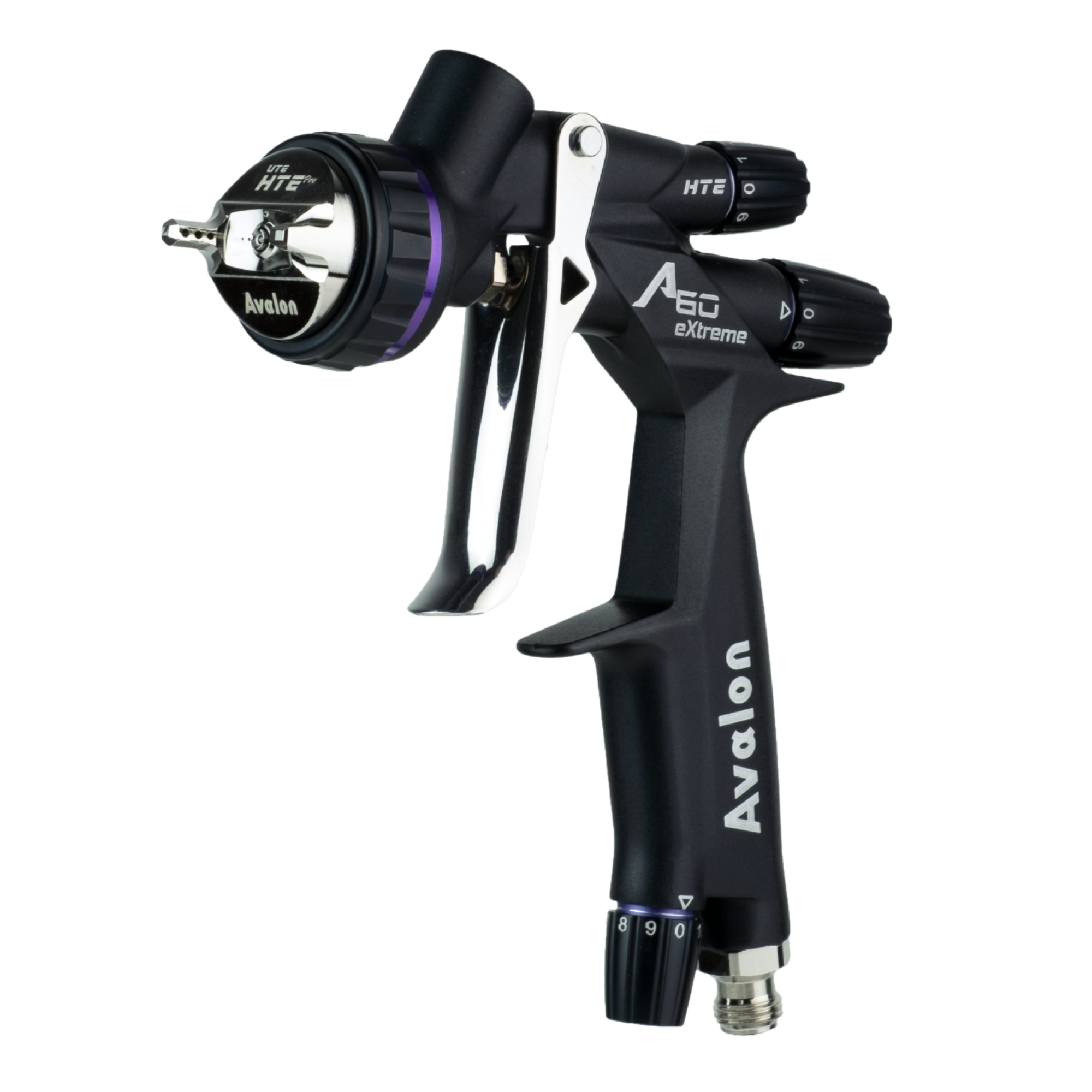
This option works well when painters want a refined fan on orientation-sensitive colors or clear finishes. Its lightweight full-size body, stainless fluid path, U-Split tip concept, and included pro kit make it practical for doors, fenders, hoods, bumpers, and blend areas where the finish has to stay consistent.
Avalon A-60 UMP For Larger Panels And Faster Flow Control
For painters who prefer fuller material delivery on medium and larger panels, the Avalon A-60 UMP 1.4 mm full-size spray gun gives auto paint for spray gun work a fast, controlled platform. Its 1.4 mm setup supports sealers, clears, and broader refinish passes.
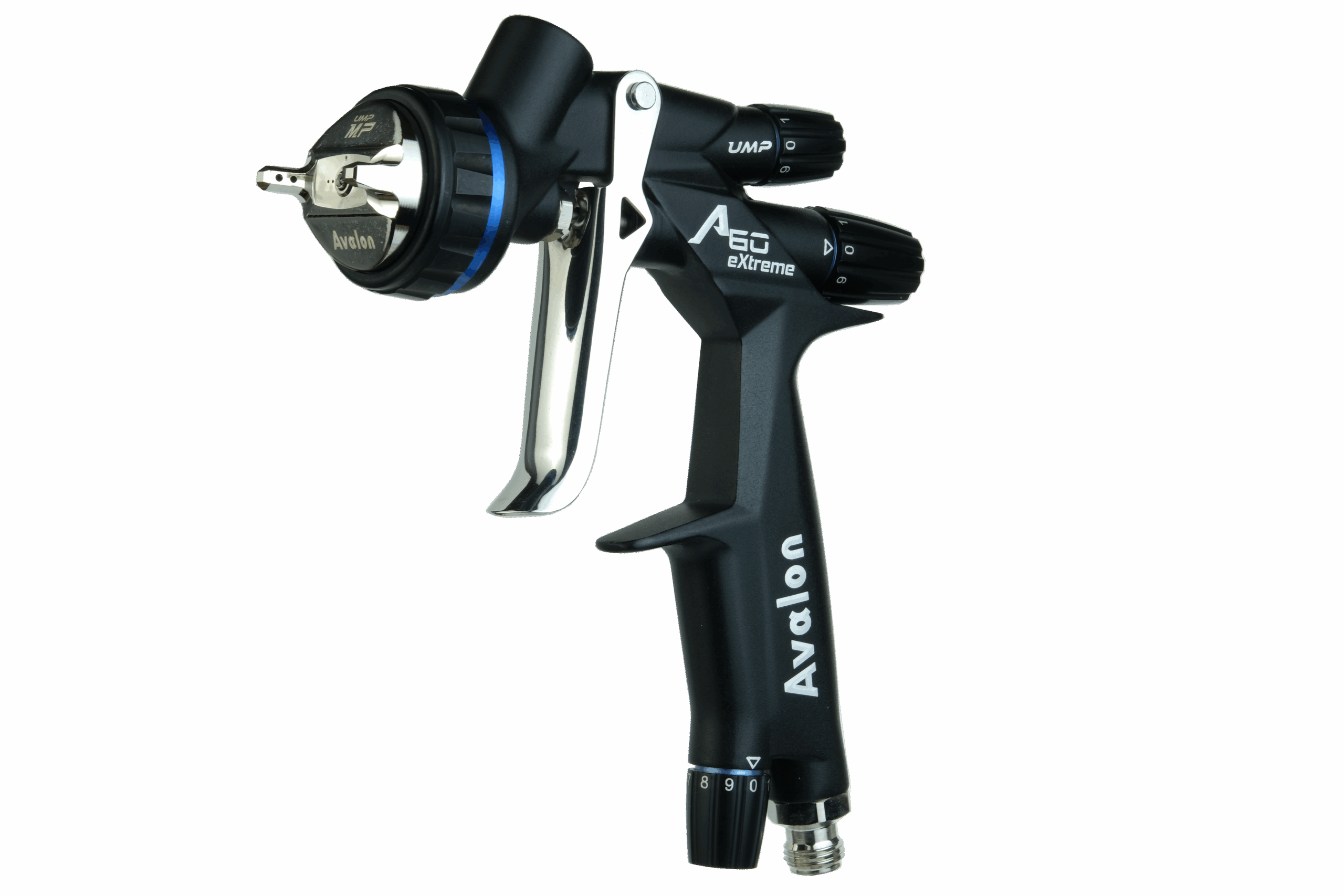
This model is useful when the job needs a wetter film, steady coverage, and less fighting with the fan. Painters looking for the best auto paint spray guns often compare 1.3 mm and 1.4 mm options because both can be correct, depending on material body, air supply, and pass speed.
Choosing Paint By Finish Goal And Repair Type
There is no single paint that is best for every vehicle, because each job has a different purpose. The best auto paint spray guns help apply the coating, but the coating system still has to match the repair. A bumper blend, full respray, restoration, fleet panel, and practice panel should not all be treated the same.
The table below helps separate common paint choices by purpose, so painters can choose auto paint for spray gun work with clearer expectations before mixing.
| Job goal | Best paint type | Why it fits |
|---|---|---|
| Professional refinish | Urethane basecoat with 2K clearcoat | Strong color control and durable gloss |
| Solid color repair | Single-stage urethane | Gloss and color in one system |
| Practice panels | Acrylic enamel or budget refinish paint | Lower cost for training |
| Primer stage | 2K urethane primer or epoxy primer | Better foundation before color |
| Custom color work | Basecoat system with compatible clear | Better control for effects and depth |
A painter should also follow the paint manufacturer’s technical sheet for mix ratio, reducer speed, flash time, and recommended nozzle range. The same practical approach appears in professional spray gun setup guidance, where coating type and spray gun setup are treated as connected choices.
Nozzle And Air Setup For Cleaner Paint Application
Once the coating is chosen, the spray gun setup has to support it. Thin basecoat, thicker primer, single-stage urethane, and clearcoat do not all need the same nozzle. Auto paint for spray gun work becomes more predictable when the painter chooses the tip size around material body, desired film build, and panel size.
Before spraying, check these setup points:
- Use the product sheet to confirm mix ratio, flash time, and nozzle range.
- Set pressure with the trigger fully pulled, not only at the wall.
- Test the fan pattern on masking paper before spraying the vehicle.
- Keep filters, hoses, couplers, and moisture control clean.
- Change only one setting at a time when correcting a problem.
A restricted air supply can make good paint look bad. Weak volume at the gun can create dry spray, coarse texture, striping, and uneven coverage. The best auto paint spray guns still need stable air, clean passages, and a painter who keeps the gun square to the panel.
Technique Habits That Help Paint Lay Down Evenly
Good auto paint for spray gun results depend on distance, speed, overlap, and trigger control. The gun should remain parallel to the panel through the full pass, especially around body lines, mirrors, bumper curves, and panel ends. Wrist twisting can overload one area while leaving another too dry.
A simple booth routine keeps the application more consistent.
- Clean and tack the panel before mixing paint.
- Confirm the coating, reducer, activator, and temperature.
- Spray a test pattern and check fan balance.
- Apply the coating with even speed and overlap.
- Respect flash time before the next coat.
This routine helps the painter separate paint problems from setup problems. If coverage looks weak, the issue may be color hiding, reducer speed, distance, or fluid delivery. If texture looks rough, the issue may be air volume, gun distance, viscosity, or pass speed.
AV Spray Guns Support For Better Paint Selection
At AV Spray Guns, we help painters choose equipment around real shop use. When a customer needs a better auto paint for spray gun setup, we look at the coating type, panel size, nozzle range, air demand, and desired finish before recommending an Avalon platform.
- We guide 1.3 mm selections for basecoat, metallics, pearls, and clearcoat.
- We support 1.4 mm choices for fuller flow on larger panels.
- We help painters compare Avalon options for daily refinish work.
- We supply spray guns and parts that support long-term booth performance.
Our goal is to make professional refinishing more controlled from the first setup step. Whether the job calls for urethane basecoat, single-stage urethane, primer, sealer, or clearcoat, we help painters match the gun to the coating so every pass has better flow, atomization, and finish consistency.